
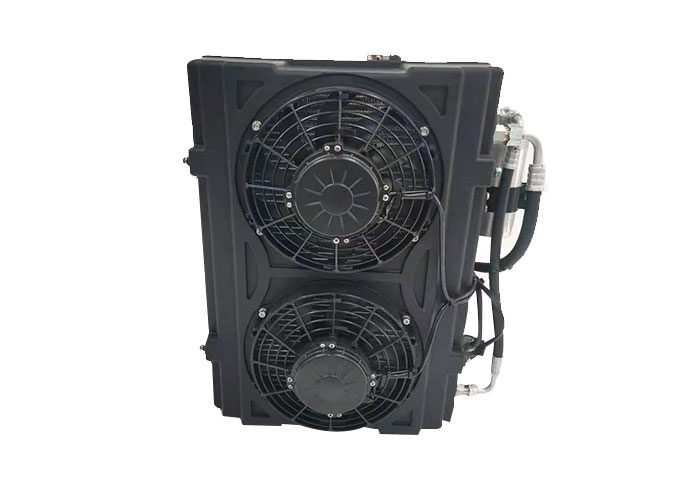
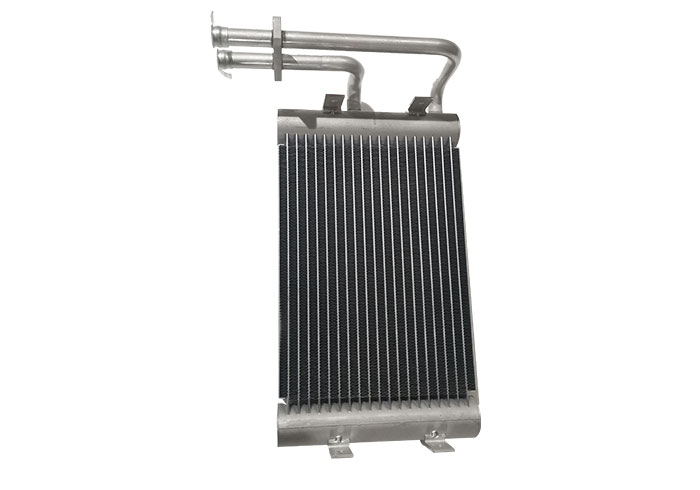
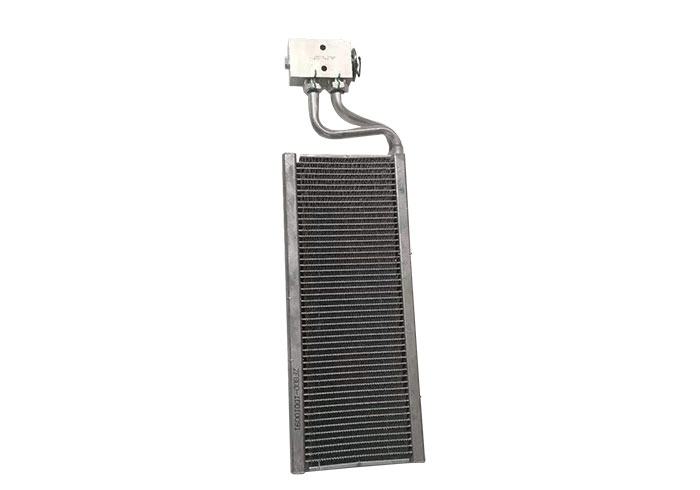
As off-road vehicles accelerate toward electrification, the performance and lifespan of their “heart”—the battery pack—now hinges critically on the quality of the Battery Thermal Management System (BTMS). Choosing the wrong system can lead to reduced range, slow charging, shortened lifespan, and even safety hazards under extreme operating conditions.

As Xuzhou Xinrun Intelligence Technology Co., Ltd., we have dedicated years to mastering the fields of off-road vehicle cab air conditioning and battery thermal management. We understand that an exceptional BTMS is far more than a simple “fan plus heat sink” solution—it is a precision system that must be meticulously tailored to the vehicle’s requirements and withstand demanding environments. Drawing on hundreds of real-world project experiences, we have distilled five key criteria for selecting the right battery thermal management system. This guide will help you cut through the confusion and make an informed decision.

Key Indicator 1: Temperature Control Accuracy and Uniformity
- Why is it so critical?The ideal operating temperature window for lithium batteries is typically narrow (e.g., 20–35°C). Excessive heat accelerates degradation and triggers thermal runaway risks; extreme cold causes sudden capacity loss and charging difficulties. More importantly, temperature differences between individual cells within the battery pack (thermal uniformity) must be strictly controlled. Failure to do so will trigger the “bottleneck effect,” drastically shortening the entire pack’s lifespan.
- How to evaluate? Focus on whether the system can stably maintain the battery pack’s maximum/minimum temperature and the maximum cell temperature difference within design targets under extreme conditions (e.g., cold start at -30°C, high-temperature operation at +45°C). Xinrun Intelligent’s solution ensures exceptional thermal uniformity even under rapidly changing operating conditions through precision flow channel design, intelligent control algorithms, and high-sensitivity sensor placement.
Key Indicator 2: Environmental Adaptability and Reliability
- Why is it so critical? Off-road vehicles operate under extremely harsh conditions: continuous high-intensity vibration, dusty (and even corrosive) environments, high humidity, and extreme temperature fluctuations. The system must possess exceptional mechanical strength, sealing integrity, and corrosion resistance.
- How to evaluate? Examine whether the supplier’s products are specifically designed and validated for off-road applications. For example: – Seismic-resistant design for compressors, pump bodies, and pipe interfaces; – Dustproof and clog-resistant capabilities for condensers and evaporators; – Waterproof and dustproof ratings for electrical connectors (recommended to meet IP67 or higher). This is precisely one of Xinrun Intelligent’s core strengths—we fully integrate our years of accumulated reliability design expertise from the construction machinery sector into our battery thermal management systems.
Key Indicator 3: System Coefficient of Performance (COP)
- Why is it so crucial? The BTMS itself is an energy-consuming unit, especially during summer when cooling is required. A higher energy efficiency ratio means less electricity is used for battery temperature control, thereby allocating more energy to power the vehicle. This directly enhances the equipment’s range and operational efficiency.
- How to evaluate? Compare the system power consumption of different solutions under identical cooling/heating requirements. Focus on whether they incorporate energy-saving technologies such as high-efficiency compressors, electronic expansion valves, and intelligent inverter control. Xinrun Intelligenceis committed to enhancing overall COP through system-level optimization, ensuring every kilowatt-hour of electricity is utilized to its fullest potential and creating direct economic value for customers.
Key Indicator 4: Integration and Lightweighting
- Why is it so crucial?Non-road vehicles feature compact spatial layouts and are highly weight-sensitive. A highly integrated BTMS saves valuable space, facilitating overall vehicle configuration; while its lightweight design enhances payload capacity and energy efficiency.
- How to evaluate? Observe whether the system employs a modular and compact design for components such as refrigerant circuits, coolant circuits, controllers, pumps, and valves. Xinrun Intelligent offers diverse solutions ranging from split-type to highly integrated configurations (e.g., cold plate integrated systems), enabling customized development tailored to the customer’s vehicle platform to achieve optimal space and weight balance.
Key Metric 5: Intelligent Control and Scalability
- Why is it so crucial?Modern vehicles require systems capable of intelligently predicting thermal demands and working in tandem with the vehicle’s overall energy management system. At the same time, a platform-based design facilitates future product upgrades, accommodating models with varying battery capacities and configurations.
- How to evaluate? Assess whether the control strategy possesses adaptive capabilities based on operating condition predictions and whether it provides standardized communication interfaces (such as CAN bus). Xinrun Intelligence’s smart controllers feature advanced algorithms and seamlessly integrate with vehicle networks to achieve comprehensive energy management. Their modular architecture also reduces costs and development cycles for customers’ product series.
In summary, selecting a suitable battery thermal management system is a technical decision that requires comprehensive consideration. It is not merely about purchasing a component, but rather choosing a partner who will accompany your equipment through all conditions and ensure the long-term stable operation of your core assets.
Xuzhou Xinrun Intelligence Technology Co., Ltd., leveraging its deep understanding of application scenarios and technological expertise in off-road vehicle thermal management, not only delivers highly reliable products meeting the above five key performance metrics but also commits to engaging in in-depth discussions about specific application scenarios with a pragmatic and truth-seeking approach. We provide comprehensive support spanning thermal management simulation analysis, customized design, and testing validation.
Let professional battery thermal management be the most reliable support for your electric devices.