
When “thermal management” becomes a critical technology for all mechanical vehicles, many tend to confuse the core requirements across different sectors. Simply put, while the fundamental principles of thermal management systems in construction machinery, agricultural machinery, and new energy vehicles share common ground, their distinct core missions, operating environments, and technological priorities have evolved into three separate “philosophies of survival.”
Thermal Management in Construction Machinery: A Prolonged and Arduous Battle of Attrition
- Core Task:
- Ensure stable operation of the power system (diesel engine/electric motor) under extreme loads.
- Prevent thermal degradation in the hydraulic system during prolonged high-intensity operation.
- Provide drivers with a reliable and comfortable cab environment in harsh conditions (high dust, vibration, and extreme temperature fluctuations).
- Core Challenge: Reliability First. The system must withstand continuous vibration, dust clogging, extreme temperature shocks, and chemical corrosion. Its design objective is rugged durability, ensuring uninterrupted operation in harsh environments like mines and construction sites.
·In a nutshell: Providing unwavering thermal protection to ensure the “steel behemoth” maintains its combat readiness under extreme operating conditions.
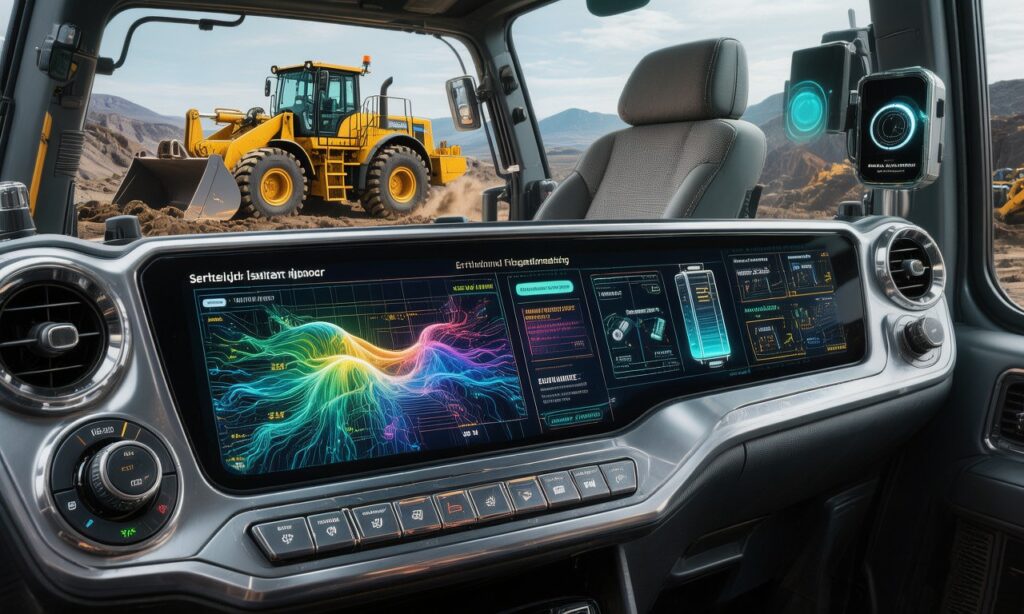
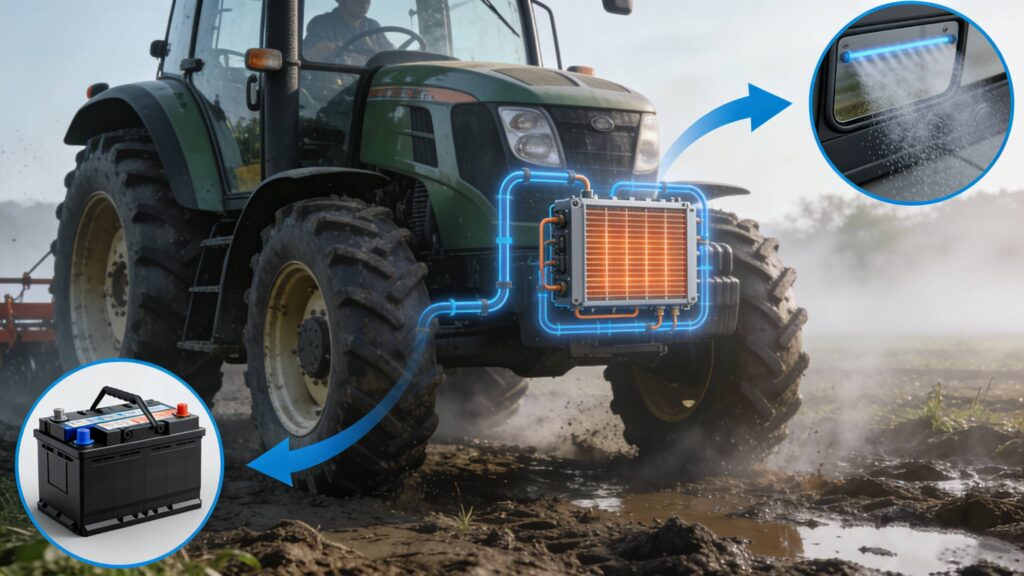
Agricultural Machinery Thermal Management: A “Seasonal, Multivariate Guerrilla Warfare”
- Core Task:
- Adapt to extreme seasonal temperature fluctuations (from spring chill to scorching heat).
- Handle high humidity, plant debris, and other specific contaminants.
- Balance operator comfort and overall machine efficiency during relatively steady yet prolonged operations.
- Core Challenges: Environmental Adaptability and Multifunctionality. The system must operate reliably during both dry, dusty harvest seasons and humid irrigation seasons, while preventing weed and dust clogging of the radiator. Increasing comfort demands must be balanced with cost control.
·In a nutshell:Accompanying the “land cultivators” as they navigate seasonal shifts and complex field conditions, achieving a balance between reliability and comfort.
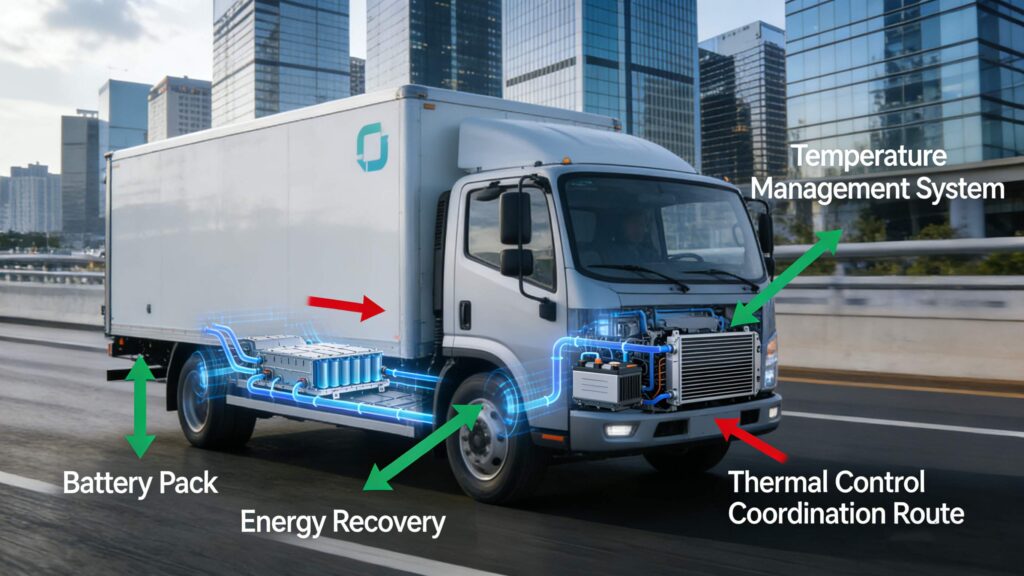
Thermal Management for New Energy Vehicles: A Precision Electronic Battle Concerning Range and Safety
- Core Task:
- Precisely control battery pack temperature, with safety and longevity as core objectives, directly determining driving range and charging speed.
- Efficiently manage heat-generating components such as electric drive systems and electronic control units.
- Meet passenger compartment comfort requirements with minimal energy consumption.
- Core Challenges: Energy Efficiency and Precision Control.Everything revolves around electricity, with thermal management energy consumption directly impacting range. The system’s high integration and intelligence demand pinpoint temperature control, typically operating in relatively clean urban road environments.
- In a nutshell: As the range guardian for electric vehicles, it achieves a precise synergy between battery safety and passenger comfort through maximum energy efficiency.
The core differences are immediately apparent.
| Dimension | construction machinery | Agricultural Machinery | New Energy Vehicles |
| Primary objective | Absolute reliability | environmental adaptability | energy efficiency and precise control |
| The most rigorous test | Vibration, dust, continuous heavy loads | Seasonal temperature variations, specific pollutants | Range, Battery Safety |
| System Complexity | High (Multi-source Synergy) | Moderate to high | Extremely high (highly integrated) |
| Work Environment | Extremely harsh | complex and volatile | relatively standardized |
Xinrun Intelligence’s Perspective
As a specialized manufacturer deeply engaged in thermal management for both off-road vehicles (construction machinery, agricultural machinery) and new energy sectors, Xuzhou Xinrun Intelligence Technology Co., Ltd. profoundly understands: there is no such thing as a “universal” thermal management solution—only “deeply tailored” system engineering.
We fortify construction machinery with steel-like reliability, endow agricultural equipment with wind-responsive adaptability, and leverage precision control and energy efficiency optimization expertise from new energy vehicles to enhance the electrification of non-road vehicles.
The essence of thermal management is enabling machinery to deliver 100% performance on its specific battlefield. Choosing a specialized partner who understands your operational context is the first step toward success.